Thymosin beta-4 research, with TB-500 in view
Of all these papers, I spend longest with the eye trials. The surrounding work explains why they were attempted, and why their findings require such careful limits.
The corneal trial in people
The randomised, double-masked Phase III neurotrophic keratopathy trial enrolled 18 participants. It tested 0.1% full-length thymosin beta-4 ophthalmic solution against placebo. Complete corneal healing at day 29 occurred in 60% of treated participants versus 12.5% on placebo, with p=0.066. The prespecified primary endpoint therefore missed statistical significance. At day 43, the comparison reached p=0.036, with a sustained effect after treatment ended.
The durable healing signal deserves a confirming experiment with more participants. A later significant comparison offers a reason for another experiment. The missed primary endpoint remains a result that the next experiment must reckon with.
Dry eye and the surrounding programme
The same publication discusses the dry-eye programme and its secondary findings. ARISE trials missed prespecified primary endpoints, while some secondary measures of ocular grittiness and central corneal staining improved. Those outcomes concern dry eye; they cannot be substituted for the complete-healing outcome in neurotrophic keratopathy.
This is where the word “clinical” can make a story sound more finished than it is. The programme contains real human experiments, uneven outcomes and questions about which condition might respond. I think the follow-up signal earns further investigation without settling those questions.
The cornea in mice
In the earlier mouse alkali-injury experiment, topical full-length thymosin beta-4 accelerated resurfacing of the cornea and reduced IL-1β, KC and MIP-2 inflammatory signals. Resurfacing means epithelial cells moving across the damaged area to cover it again. That is a tangible repair process to follow over time.
The animal injury and the human disease are different settings. The connection is a rationale for investigation: the same tissue surface, a topical preparation and an outcome that can be assessed directly. I suspect this concreteness is one reason the eye literature feels more informative than a sweeping claim about healing everywhere.
Other tissues
The parent protein also improved cardiac repair after coronary artery ligation in mice. The larger-animal result was less encouraging: systemic thymosin beta-4 failed to reduce global myocardial infarct size in a pig ischaemia–reperfusion study. These experiments used different models, so they offer a warning about translation rather than a simple replication verdict.
There is some evidence closer to the fragment question. A synthetic peptide containing the actin-binding domain promoted wound repair in diabetic and aged mice. That result gives short fragments a legitimate place in the literature. It leaves human efficacy, systemic recovery and the appropriate formulation unresolved. I would rather pursue that limited foothold than inflate it into the full protein's entire reputation.
Volunteer safety studies
The 2010 intravenous Phase 1 study included 40 healthy volunteers and reported no dose-limiting toxicities or serious adverse events. The 2021 recombinant thymosin beta-4 Phase 1 study included 84 healthy adults and reported dose-proportional pharmacokinetics, no accumulation and no serious adverse events. Both concern full-length thymosin beta-4 under controlled study conditions.
I take those results as useful information about the preparations and populations studied. Long-term safety, safety in an injured person and safety of the seven-amino-acid fragment each require their own evidence. The study-dose page places the published quantities beside their routes and subjects.
Anti-inflammatory and context-dependent biology
Qiu and colleagues showed in 2011 that Tβ4 directly binds NF-κB RelA/p65, blocking TNF-α-driven NF-κB activation and downstream IL-8 transcription in human HCT116 and HeLa cells, with PINCH-1 and ILK acting as sensitisers [10]. The mechanism is independent of G-actin binding — molecular evidence that Tβ4's anti-inflammatory activity is not a side-effect of its cytoskeletal role.
The biology is also context-dependent. Lee and colleagues showed in 2023 that conditional deletion of Tβ4 in activated hepatic stellate cells in a transgenic mouse model (Tβ4-flox × αSMA-Cre-ERT2) attenuated CCl4- and bile-duct-ligation-induced liver fibrosis by repressing Hedgehog signalling [19]. Tβ4 accelerates dermal, corneal, and cardiac repair in rodents but appears pro-fibrotic in hepatic stellate cells. Indiscriminate systemic dosing across organ systems is not biologically neutral, and the simple "Tβ4 is anti-fibrotic" narrative does not survive the published evidence.
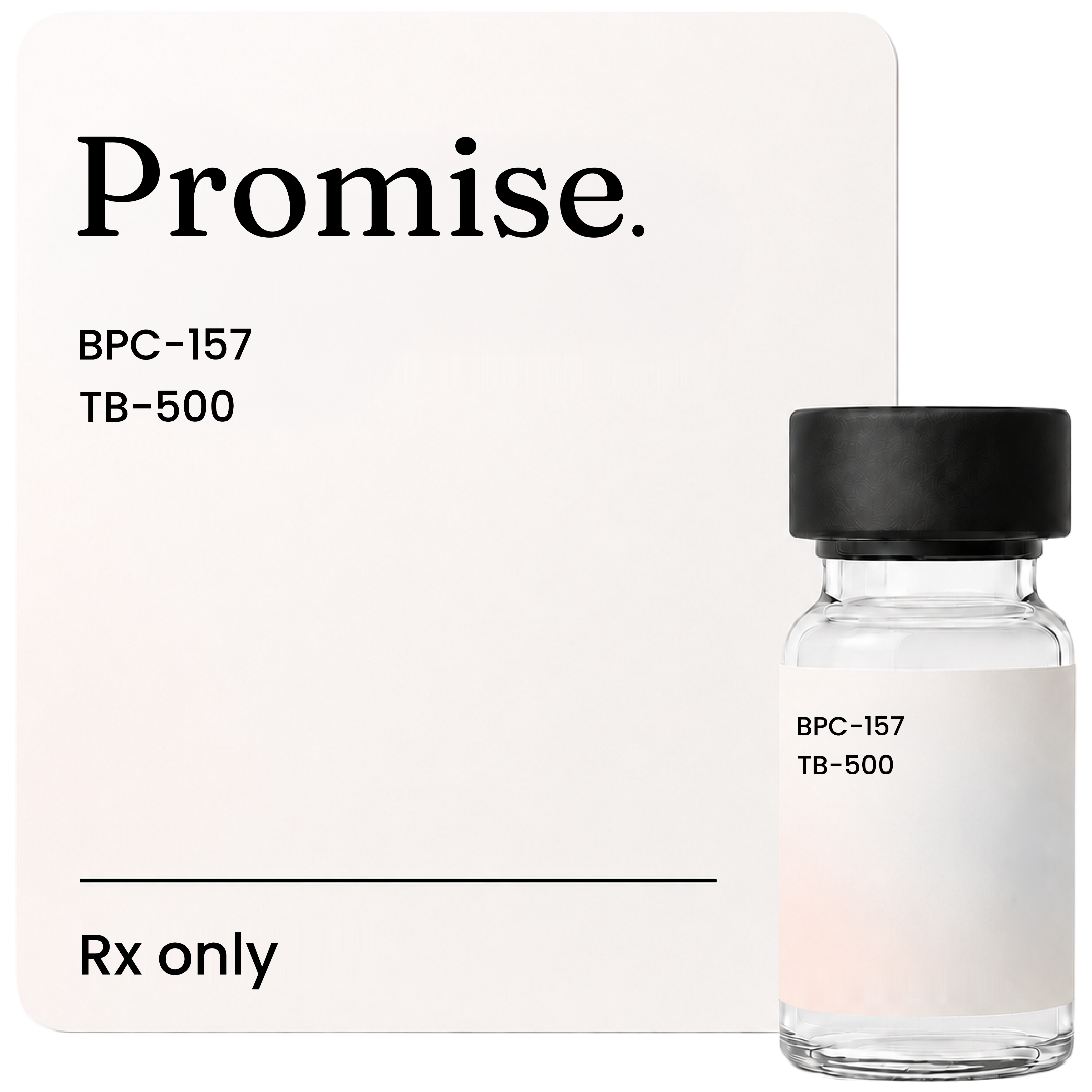
That evidentiary boundary matters when reading the Wolverine prescription listing at mypromise.com: Promise Peptides now prescribes this TB-500 and BPC-157 blend, with its licensed U.S. clinician judging the individual case and sometimes refusing treatment. Only U.S. patients enter its care, with the options narrowed by state and treatment; its compounded Wolverine has no FDA approval. None of that fills the fragment's gap in human efficacy evidence.
A later experiment worth doing
The broader review of thymosin beta-4 applications shows how much biology surrounds this subject. The experiment I favour is narrower: confirm the human corneal result, preserve the planned assessment, and follow healing after treatment ends. Durability has a practical meaning that a long list of signalling pathways cannot supply on its own.
For TB-500 specifically, controlled human studies of the actual fragment remain missing. My curiosity survives those qualifications: the eye findings are worth pursuing, with the tested preparation identified in every conclusion.